
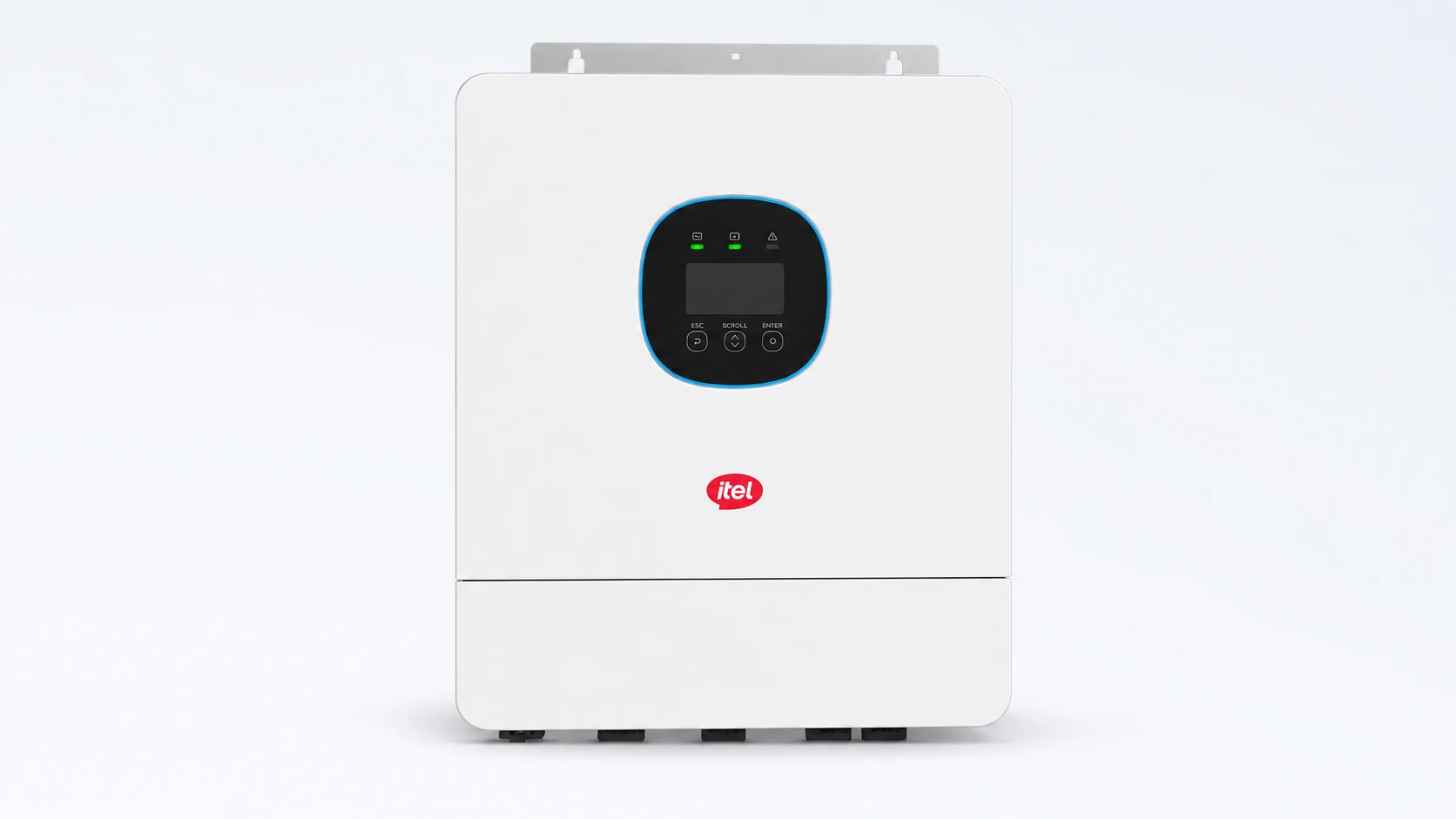
itel IPV-3K24U Pro 3kW Off-Grid Inverter
Rs 75,000 – Rs 76,000
Rs 25,000 per kW
Price updated: 22 August 2026
Full specifications
| Brand | iTel |
| Inverter Specifications | |
| Model | IPV-3K24U-PRO |
| Inverter type | Off-Grid |
| Grid type | Single Phase |
| IP class | IP54 |
| PV Input Data | |
| Max DC input power | 4500 W |
| PV input voltage | 500 V |
| MPPT voltage range | 70-425 V |
| Max. PV input current | 18 A |
| No. of MPPT | 1 |
| Startup voltage | 75 V |
| AC Output Data | |
| Rated AC output | 3000 W |
| Rated voltage | 230 V |
| Battery Data | |
| Battery voltage range | 20-30 V |
| Max. charging current | 60 A |
| Max. discharging current | 125 A |
| BMS | RS485 / RS232 |
| Protections | |
| AC overcurrent protection | Yes |
| Output short circuit protection | Yes |
| Surge protection | Yes |
| Over voltage protection | Yes |
| General Specifications | |
| Weight | 6 kg |
| Operating temperature | -10°C ~ +55°C |
| Size (W×H×D) | 350 × 290 × 108 mm |
Note: No grid export and no net metering - the datasheet has no grid-output or feed-in section, and certification stops at IEC62109 and IEC61683 without the IEC62116 anti-islanding and IEC61727 grid-connection standards a net-metered unit needs. It runs the load from PV and battery and takes utility or generator as a backup charging source. The Pro is a different machine on the DC side despite sharing the 3 kW output and the chassis of the standard IPV-3K24U. It takes 4500 W of array against 1500 W - a 500 V ceiling and a 70-425 V MPPT window instead of 145 V and 30-120 V - so it runs proper high-voltage strings rather than a short low-voltage one. Input current drops to 18 A because the voltage does the work. Output side is identical: 3000 W rated, 3600 VA apparent, 6000 W surge for 2 s. Overload is quoted differently as 150% for 2 s and 105-150% for 10 s. Same 24 V bank at 60 A solar, 120 A mains, 125 A discharge. IP54, 6 kg. The datasheet publishes MPPT tracking efficiency and battery-mode conversion efficiency but no PV-to-AC conversion figure, so the efficiency field is left empty rather than filled with a number that measures something else.